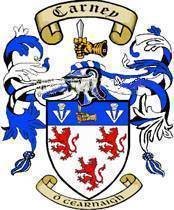
Carney & Wehofer Family
Genealogy Pages

Notes
Matches 12,301 to 12,350 of 13,676
| # | Notes | Linked to |
|---|---|---|
| 12301 | Tombstone varifies name, birth and deat dates. Adeline's tombstone varifies marriage. Will from Frederick Binkley: I will and direct that my son Franklin C. Binkley shall account to my executor at the final division of my estate for the sum of thirty dollars which I sent him while he was in the state of Arkansas and also for twenty dollars [?] money sent him by my son William B. Binkley at my request which last mentioned sum I direct that my Executor shall pay to William B. Binkley in addition to his distributive share of my estate and that none of my other children shall be required to account for any advancement of money or property made to them in my lifetime. *FIND A GRAVE- Memorial # 6495499 reads: Birth Feb 15, 1774 North Carolina, USA Died Sep 15, 1857 Davidson County, Tennessee, USA. Frederick Binkley, son of John and Johanna Leedy Binkley, born in North Carolina, Feb 15, 1774, died Sep 18, 1857, married Dec 24, 1804 to Adeline Shackleford, daughter of Roger and Nancy Carter Shackleford. Burial Mount Juliet Memorial Gardens. Mount Juliet, Wilson, Tennseess, USA. He must have died on their farm. but buried here. Earlier we had born 12 Feb 1774. headstone is 15 Feb 1774. www,binkley tarpley.com-Ancestors by Sara Binkley Tarpley [copyright 2003-2005] About 1790 a sixteen -year-old boy travelled westward with his uncle's family. He left behind him his own family and the order of a Moravian community. Ahead of him lay the unknown and the wilderness of the territory then called the Cumberland. In his new home he would rub elbows with the leaders of the fledgling state of Tennessee. He would become a prosperous farmer and the father of a large and active family. His name was Frederick Binkley. Frederick was born on Feb 12, 1774, in the Moravian farming community of Bethania, North Carolina, the sixth of the twelve children of Johannes Binckele and Johanna Jacobina Leedy. Nothing is known of Fredereick's childhood. Both family oral tradition and written records indicate that he came to Tennessee with his uncle Adam Binkley. Not long after his arrival, he made the acquaintance of some of the area's first and most prominent citizens. In 1791 the city of Nashville sold what the late Tennessee historian Park Marshall described as the city's "first public utility." The "utility" was a salt spring that had provided vital salt for the fledgling community but which had ceased producing. Judge John McNairy purchased the tract that contained the spring, believing that if he dug deeply enough he would find the subterranean source of the spring and would profit from the sale of salt. To this end he hired thrity-six-year old Henry Guthrie, s signed of Nashville's first governing document, the Cumberland Compact, and seventeen-year-old Frederick Binkley. Although the two dug over 160 feet, they found only sulphur water; and McNairy abandoned the project. In 1799 John Overton, attorney, judge, land speculator, and friend of Andrew Jackson [with whom he fonded the city of Memphis] hired Frederick and another carpenter, David Cummins, to build the home later known as Travellers Rest. [At the time of the house's construction, the site was dubbed "Golgotha" because of the number of Native American skeletons that were found there.] The complicated agreement between Overton and the two men is described in MORE LANDMARKS OF TENNESSEE HISTORY, edited by Robert M McBride: Overton agree to sell to two carpenters, David Cumming and Frederick Pinkley, 320 acres of land on Stone's River for two dollars an acre. The carpenters were to pay for the land in 'Carpentry and Joiners Work.' which was to be judged by three other carpenters, who were to "calculate" the value of the work done in money or actual cash. . ' Overton agreed to have the lumber hauled to the site and to feed the two carpenters but notrto do their laundry! The carpenters were to hew the corner posts, wills, sleepers, and other heavy timbers and to frame the house; they were to receive $45 in cash when the roof was completed, but this payment was to be charged against the cost of the land on Stone's River. On August 5, 1801, Frederick recroded his deed for the highly desirable land. In his ninettenth-century History of Davidson County, Tenn. W.W. Clayton worte, "The Hermitage neighborhood was regarded as the best section of Davidson County, the soil being better adapted for cotton than any other part of the county, and was settled by wealthy men and cotton-planters." Among Frederick's new neighbors were the future president Andrew Jackson and his wife's relatives, the Donelsons. Although Frederick became prosperous, he was never really wealthy. He may indeed have been a cotton planter. By 1820 he owned two slaves; by 1850 he owned ten. On Christmas Eve 1804 the thirty-year-old Frederick married fifteen year old Adeline Shackleford, daughter of Roger Shackleford and the late Nancy Carter. David Cummins served as bondsman. How Frederick met Adeline, who was born in Madison Co. Kentucky, is not known. Perhaps they met through Frederick's old acquaintance Henry Guthrie, who had married Adeline's older sister Nancy Ann in Madison Co. on Nov 24, 1796. It was probably around the time of his marriage that Frederick build a log house on his property. And like many new homeowners, he soon found himself with money problems. On Oct 16, 1809, Frederick signed a note to the firm of Deaderick and Somerville for $110.84, promising to repay them three days later. When he defaulted, Deaderick and Somerville sued, with the case being heard on Jan 15, 1810. Frederick's lawyer Jessie Wharton sought and obtained what the court record describes as "Sundry continuances," until finally the case was settled on Oct 20, 1810. The jury found in favor of Deadrick & Somerville and awarded them the original amount plus damages of $6.65 and costs. [Deadrick & Somerville had asked for damages of $60.] Frederick either could no or would no pay Deaderick & Somerville. The Dec. 7 ,1810, edition of the Democratic Clarion and Tennessee Gazette carried this notice: On the 19th of January next in the town of Nashville, there will be a public sale directed by the Davidson Co. court of 320 acres, that belong to Frederick Pinkley. The property was attached by Deaderick & Somerville M.C. Dunn." The threat of their land's sale must have struck terror to the hearats of Frederick and Adeline, By Dec. 1810 the log house was home not just ot them but also to four small boys: four year old Henry John, three year old John Henry, nineteen month old William Blackman, and the newborn Joseph Shackleford. The records do not tell us why Frederick incurred the deb, nor do they record his payment of it; but the prospect of losing his land had the desired effect. He evidently paid Deaderick and Somerveille, the sale did not take place. By 1820 Frederick was advancing toward a place in the middle socioeconomic tier of his neighborhood in the Fourth Civil District of Davidson County. And although he continued his association with prominent citizens, it was still as a contractor rather than an equal. Among the papers of his neighbor Andrew Jackson is a receipt, dated May 1, 1817, for the construction of a carriage house. Frederick may have worked as a carpenter for others as well; we know of his work for Jackson only because of Jackson's prominence. Whatever the sources of Frederick's income during this period, his family continued to grow. Eventually there would be 11 sons and 3 daughters. In an age when childhood death was frequent, the Frederick Binkley family seems to have been uncommonly healthy. In 1821, the seventh child, five year old Andrew, died and was buried in the family graveyard on a hill behind the log house. His grave was the first of the marked graves. Andrew was the only one of Frederick and Adeline's children to die before adulthood. While Frederick and Adeline's family was growing, her father, Roger Shackleford, and her stepmother, Sally Laird, joined a sect that prohibited reproduction, the Shakers. On July 10, 1813, Roger, Sally , their sons Zachariah, Montgomery, Barney and Hudson, and a fifth unnamed child, possibly a daughter, arrived at the Shaker community at South Union, Logan County, Kentucky. What Adeline and Frederick thought of their conversion is unknown; but one can imagine that they might have met it with perplexity, sonsternation. or disapproval. Roger and Sally continued as members of the South Union Shakers until their deaths in 1825. By 1850 nine of the surviving thirteen children were married. However, not all the marriages had been made in Heaven. With a little imagination we can picture the bedtime conversations that Frederick and Adeline, living in an age when divorce was rare, must have had about their daughter Sarah and her husband Alfred Bass. Married on Aug 12, 1847, Alfred and Sarah had a son JOhn Frederick in 1848. However, in 1849 Alfred had gone to Yazoc County, Mississippi, where he had become the overseer on a physician's plantation. Sarah and little John remianed in Tennessee, living with her parents. Did Alfred abandon Sarah, as she would later charge in court, or did she refuse to move to Mississippi with him? There is no way that we can known. However, in 1851 she filed for divorce, charging "Wilful and Malicious desertion;" and on June 13, 1854, the Davidson County Chancery Court granted Sarah the divorce. A little more than three years later, in Oct 1857, Alfred had returned to Tennessee; and the couple were remarried. The children were moving away, too. By 1850 four sons and a daughter were living in surrounding counties. Eventually children would move into other states- Kentucky, Illinois, and Texas. One son, Franklin Carter was in Arkansas for a time, probably between 1850-1860. He borrowed money from both his father and his older brother William during this adventure; in his 1857 will Frederick wrote: I will and direct that my son Franklin C. Binkley shall account to my executor at the final division of my estate for the sum of thirty dollars which I sent him while he was in the state of Arkansas and also for twenty dollars[? money sent him by my son William B. Binkley at my request which last mention sum I direct that my Executor shall pay to William B.Binkley in addition to his distributive share of my estate and that none of my other children shall be required to account for any advancement of money or property made to them in my lifetime. Frederick seesm to have been less than happy with Franklin's handling | BINKLEY, Frederich Binkele Binckele (I26539)
|
| 12302 | Tombstone verifies information. | BINKLEY, Benjamin Franklin (I594780794)
|
| 12303 | Tonya Mauldin 8600 Washington Ave. Alexandria, VA 22309 | Source (S360)
|
| 12304 | Took control of his father's estate from his mother, Mary Case Hillyer, on 5 AUG 1717 ("A in A" pg 14). Descendants are found in CN and NY plus the west. | ALDERMAN, William Jr. (I21078)
|
| 12305 | Toulouse, France | THOUARS, Aldéarde (Aldearde) De (I10616)
|
| 12306 | Toulouse, France | TOULOUSE, Pons II Guillaume Comte De (I10631)
|
| 12307 | Township #7, Cleveland Co, NC | MCGINNIS, Richard (I11165)
|
| 12308 | Traceable to the mid 1500's in Benton England. Robert was the first to move to the new country as Robert died in Charles City, Virgina. Son Robert was born in New Castle and also died in Virginia. | KILLINGSWORTH, Robert Sr. (I2210)
|
| 12309 | Trafford Hall, or House, in Trafford Park, the residence of Thomas Joseph Trafford, descended from the ancient family, the Lords of Barton and Stretford, is a modern structure of free stone, with semi-circle front, divided by columns. Attached to it are the remains of the old fabric, comprised of brick gables. This old and knightly family of Trafford, seated at Trafford from a period antecedent to the Norman Conquest, has preserved time immemorial an unbroken descent. Source: lorenfamily.com | TRAFFORD, Randulphus De (I10862)
|
| 12310 | Traguilla was a slave and the lover and secret husband of Amalsuntha,daughter of Theodoric the Great, King of the Ostrogoths. When her mother,Queen Audofleda, a sister of Clovis, found them together, Traguilla waskilled and Amalasuntha given a good beating. She later married Eutharicand had a son that became king the Ostrogoths. | Traguilla (I8630)
|
| 12311 | Trapper, Explorer, Farmer. | DICKSON, Joseph Harrison (I594788533)
|
| 12312 | Triplet | GARTON (GARTEN), Jacob Warren (I10024)
|
| 12313 | Triplet | GARTON (GARTEN), Phillip (I10026)
|
| 12314 | Triplet | GARTON (GARTEN), George (I10027)
|
| 12315 | Trula Carney Sumrall, 95, of Jayess, died of heart failure Sept. 10, 2000, at Beverly Health Care Nursing Home in Brookhaven. Burial will be in Jayess Baptist Church cemetery. Mrs. Sumrall was born July 16, 1905, in Jayess. She was the daughter of Carrol Carney and Isabelle Alexander Carney. Mrs. Sumrall was preceded in death by her parents; her husband, Festus Sumrall; and numerous brothers and sisters. Survivors include two sons and one daughter-in-law, Jerry M. Sumrall and Paul Leroy Sumrall and Bernice Sumrall, all of Natchez; one daughter, Dorothy Mae Alexander of Jayess; numerous grandchildren, great-grandchildren and great-great-grandchildren. Above obit appeared in McComb Enterprise Journal Sep. 11, 2000. | CARNEY, Trula (I1689)
|
| 12316 | trustee of Creek Church | QUILLIAMS, Myron Jasper (I8470)
|
| 12317 | Tudur Trefor; born c900; married Angharad, daughter of Hywell "Ddu" ("The Good"), King of Wales. [Burke's Peerage] ame of Tudor Trevor, the founder of the Tribe of the Marches, bears a high place. At no great distance from each other we have the families of Trevor of Brynkinalt, Thomas of Trevor Hall, Morrall of Cilhendref, Lloyd of Plas Madoc and Clochvaen, Lloyd of Rhagatt, Dymocke of Penley, Jones of Llanerchrugog, Lloyd of Leaton Knolls, Mostyn of Mostyn, Mostyn of Talacre, &c., &c., all holding good estates, which descended to them from Tudor Trevor, who are themselves his descendants. By Angharad, his wife Tudor Trevor left 3 sons, Goronwy, Lluddocca, and Dingad, among whom he divided his lands, every son being held equal, thou some slight favor being shewn to the youngest who had a right to the paternal home, the law providing for him, who by reason of his tender years might be least able to provide for himself. In the division of lands the southern portions fell to the lot of the representat ive of Goronwy, for he predeceased his father, leaving only a daughter and heir, Rheingar, who carried her possessions by marriage of Cuhelyn ab Ivor ab Severnus, and from them came Elystan Glodrydd, Prince of Fferlis, the country between the Wye and Severn. The third son, Dingad, received the Lordship of Maelor Cymraeg, while Oswestry, Chirk, Whittington and Maelor Saesneg fell to the lot of Lloddocca. Source: Transactions of the Shropshire Archaeological and Natural History Society by Shropshire Archaeological and Natural History Society (Great Britain) Publication date 1884 --------------- The Fifteen Tribes of North Wales TUDOR TREVOR, the tribe of *March, called likewise in our books Llwyth Maelor (or the tribe of Maelor,) was the son of Ynyr ap Cadfarch, descended of Cadell Deurnllug, King of Powys. He is said to have been the founder of, and to have re|sided at, Whittington Castle, which continued in his posterity for many generations after. His mother was Rhiengar, daughter to Lluddocca ap Caradoc Vreichfras, earl of Hereford, who was one of the knights of king Arthur's Round Table. Tudor had large possessions in Herefordshire, in right of his mother, as well as in that country called Ferlys, which lies between the rivers Wye and Severne. He was cotemporary with Howel Dda, king of Wales, whose daughter Angharad he married, by whom he had three sons and one daughter. Powell, of Edenhope, in his Pen|t•chia, describes his arms in the following manner: Em in•is fulgens Theodor. parma T•e•, Dat rapidum fulvumque sinistro verte leonem: Mos•ni sunt nota satis, simul arma T•e•is. Which may be thus expressed in plain English: Parted per bend finister ermine and ermines, over all a lion rampant or; the well-known arms of the Mostyns, and also of the Trevors. TRIBE OF MARCH. XVI. TUDOR TREVOR.— For his Coat of Arms, consult PLATE IV. p. 31. Page 314 https://quod.lib.umich.edu/e/ecco/004874860.0001.000/1:14.2?rgn=div2;view=fulltext Less Reason This Information Is Correct Found website regarding the fifteen tribes of North Wales | YNYR, Tewdwr Ap Lord Of Hereford (I10561)
|
| 12318 | Turner Brashears exerted the most influence in West Yazoo's councils and among its most prominent cheifs and families. Spanish officials considered Turner Brashears "an intimate friend of Franchimastabe' and Farnchimastabe delcared that Brashears "deserved all of his confidence. A Native of MD Brasheers journeyed to Choctaw territory sometime during the American Rev. He became a trader in West Yazoo for the Panton, Leslie Company and after the US established th MS Territory in 1798, Brashears ran a tavern on the Natchez Trace and owned several Slaves. ..Significantly Brashears steered West Yazoos Leaders in an independant direction that was neither wholly pro Spanish nor pro American. Such a list of achieve ments portrays Brashears success in the business world, but it masks the role of those who shared their lives with him and made his achievements possible. Brashear's wife was the key to his success among the Choctaws because she provided him a kinship tie within Choctaw Society and connected him to some of the most esteemed Choctaw men and elite families of the 8th century. Brashears wife was a daughter of Taboca and probably a niece of Granchimastabe(One of Franchimastabe sisters was likely Taboca wife since Franchimastabe promoted one of Taboca sons as his successor a natural arrangement for an uncle and maternal nephew in Choctaw matrilineal society. ) THese familia ties made Brashears and any of his C hoca Children the responsibility of Franchimastae while simultaneously connecting Brashaears with Taboca Such bonds facilitated trade relationships: traders gained acceptance and secured a steady supply of customers, while Choctaw elites obtained constant access to European goods and the prestige of a trader living in their town. The contemporary Choctaw writer Le Anne How offers a plausible scenario for how prominent Choctaw families chose traders for marriage. In her short story. "Danse D'Amour, Danse de Mort" she suggests that a girl's maternal uncle did the selecting: "Atokotubbee asked his niece to choose the Naholla with the young face and graying hair. "teach that one to dane, alla tek,' he said, motioning her toward the four white mean seated apart of the Choctaws next to the fire" ----------- TREATY WITH THE CHOCTAW -- 1816 A treaty of cession between the United States of America and the Choctaw Nation of Indians. JAMES MADISON, president of the United States of America, by general John Coffee, John Rhea, and John M'Kee, esquires, commissioners on the part of the United States, duly authorized for that purpose, on the one part, and the mingoes, leaders, captains, and warriors, of the Chactaw nation, in general council assembled, in behalf of themselves and the whole nation, on the other part, have entered into the following articles, which, when ratified by the president of the United States, with the advice and consent of the senate, shall be obligatory on both parties: ARTICLE 1. The Chactaw nation, for the consideration hereafter mentioned, cede to the United States all their title and claim to lands lying east of the following boundary, beginning at the mouth of Ooktibbuha, the Chickasaw boundary, and running from thence down the Tombigby river, until it intersects the northern boundary of a cession made to the United States by the Chactaws, at Mount Dexter, on the 16th November, 1805. ARTICLE 2. In consideration of the foregoing cession, the United States engage to pay to the Chactaw nation the sum of six thousand dollars annually, for twenty years; they also agree to pay them in merchandise, to be delivered immediately on signing the present treaty, the sum of ten thousand dollars. Done and executed in full and open council, at the Choctaw trading house, this twenty-fourth day of October, in the year of our Lord one thousand eight hundred and sixteen, and of the independence of the United States the forty-first. John Coffee, John Rhea, John McKee, Mushoolatubee, his x mark, Pooshamallaha, his x mark, Pukshunnubbu, his x mark, General Terror, his x mark, Choctaw Eestannokee, his x mark, General Humming Bird, his x mark, Talking warrior, his x mark, David Folsom, Bob Cole, his x mark, Oofuppa, his x mark, Hoopoieeskitteenee, his x mark, Hoopoieemiko, his x mark, Hoopoieethoma, his x mark, Witness: Tho. H. Williams, secretary to the commission, John Pitchlynn, interpreter, Turner Brashear, interpreter, M. Mackey, interpreter, Silas Dinsmoor, R. Chamberlin. Turner was a descendant of Robert or Benois Brasseur, French Huguenot immigrants to Virginia, ca. 1635, whose surname was anglicized as Brashear. Source: Madison County (Mississippi) Journal Just east of the present site of Ridgeland was the first stand to be opened on the Natchez Trace, called Turner Brashear's Stand. In The Mississippi Herald and The Natchez Gazette, it was announced on Dec. 2, 1806, that Turner Brashear, an enterprising frontiersman, had opened a "house of entertainment, in the wilderness on the road leading from Natchez to Nashville about 40 miles from William Smith's at the Indian line." Brashear's Stand was probably the first opened here as a result of the U.S. Agent Silas Dinsmoor's successful negotiations in 1805 providing for three such establishments. The stand became well known and was listed as one of the Trace's stations in the travel guides at the time. After 1850, King's Inn occupied the ground on which Brashear's Stand formerly stood. It was reported that as many as 80 guests would spend a night at the stand and there was always a minimum of four or five guests. Andrew Jackson visited the Inn on his return from the Battle of New Orleans, and Gen. Stephen D. Lee used it as his headquarters during the Civil War. There were times when guests at the famous King's Inn failed to complete their journey, especially if they appeared to be wealthy. King's Inn owner John King was an associate of the famous Murrell gang, and according to legend, did not mind relieving his guests of their wealth and tossing their remains into the wilderness. Perhaps because of the notorious inference, King's Inn's name was changed to Hawthorne Vale by Maryetta Culley, the oldest daughter of DeVander Culley, who bought it in 1852. Hawthorne Vale was destroyed by fire in 1896. | BRASHEARS, Robert Turner " Turner " (I112680712)
|
| 12319 | Turof, son of Torf, inherited from his mother the Pont Audemar estate on the banks of the Risele ten miles from the Seine. | HARCOURT, Turolf Sire Of Pont-Audemer De (I24322)
|
| 12320 | Turton has Eva/Dulceline married to Tourade de Pontaudemer, and mother of Josceline. According to Todd A. Farmerie & Alan B. Wilson, citing the latest works, Senfrie was mother of Josceline, but she married a forester of St. Vaast, while her sister Duvelina married Turulf de Pont Audemer. ------------------ The following is excerpted (full post is in notes under father) from a post to SGM, 3 Dec 1996, by Todd Farmerie: From: Todd A. Farmerie (taf2@po.cwru.edu) Subject: Robert de Torigny and the family of Gunnor, Duchess of Normandy Newsgroups: soc.genealogy.medieval Date: 1996/12/03 Gunnor had at least three sisters, of which the oldest appears to have been Senfria (Seinfreda), who was wife of the (unnamed) forester from the area of St. Vaast d'Equiqueville, and it was her charms which are said first to have attracted the attentions Duke Richard I. She appears to have had at least one daughter, Joscelina, wife of Hugh de Montgomery. (Torigny makes Joscelina daughter of another sister, Wevia, but a contemporary of Torigny, in demonstrating the genealogical impediment to a marriage of a bastard of Henry I to a Montgomery descendant specifically calls Joscelina's mother Senfria, and the inheritance by the Montgomerys of large holdings suggests that Joscelina was a significant coheir to her parents, which does not match Wevia's family where two sons would be expected to acquire most of the family land.) Hugh de Montgomery and Joscelina had a son Roger, but contrary to Torigny's statements, he was not the Conquest baron of that name, but instead his father. By a wife possibly named Emma, Roger had: Hugh; Roger (who married Mabel of Belleme and played a significant role in pre-Conquest Normandy); William (who murdered cousin Osbern); Robert, and Gilbert. | CREPON, Senfrie (Senfria\Seinfreda) Of (I11778)
|
| 12321 | Tuscaloosa Co, AL Deed Bk P, p. 282: Samuel Avera to William Robertson. 18 Feb. 1839 There is another deed listing Samuel Avera and wife, Lucinda. The Democratis Gazette & Flag of the Union, Tuscaloosa, AL: 23 Feb 1842. Married on Monday eve last by Rev. Mr. Hamilton, Mr. Geo D. Purcell of VA to Mrs. Mary L. Avery of Tuscalloosa. (James Slicer Purcell b. Tuscaloosa 25 July 1843. In 1856 his parents, Geo Dowell Purcell and Mary Lucinda Avera moved to Black Hawk, Carroll Co, MS. J.S. Purcell served in Civil War). 16,000 Lines To Pilgrim, National Sons & Daughters of the Pilgrims: Gives info on Samuel Avery and Lucinda Lane. Refers to McFadden, E.G. C of Confederacy R; Wheeler, History of NC, v. I & II; DAR 381070; Whitfield, Bryan, Smith v. II. Carroll County, Mississippi, Pioneers, by Betty Couch Wiltshire: Personal Tax Roll For 1847: Avery, Samuel Samuel Avery is found on the 1850 Carroll Co, MS census, p. 239 Samuel Avara 60 M Farmer NC Lucinda Avara 53 F NC William B. Hines 31 M Meth Minister AL Jane F. Hines 27 F NC John A. Hines 8 M MS Mary Hines 9/12 F MS Samuel Avery is found on the 1860 Carroll Co, MS census, p. 4 Samuel Avery 72 M Farmer NC Lucinda Avery 64 F NC E. Purcell 9 F AL A. Purcell 7 F AL Black Hawk Cemetery: Avery, Samuel b. Nov 4, 1788 d. Nov 22, 1867 Obituary of Samuel Avera From The Christian Advocate New Orleans, Louisiana June 25, 1868 Samuel Avera was born in Johnson County, North Carolina, November 4, 1788. In the above county and State he grew up to manhood, and married Miss Lucinda Lane, who is ...age still survives him. In 1820 he removed to the city of Raleigh, where in 1821 he professes religion and joined the Methodist Episcopal Church. In 1830 he removed to the State of Alabama, and from thence, in 1844, to the State of Mississippi, where he resided until God called him hence. He died November 24, 1867 in the eightieth year of his age. From his first connection with the church he lived a ...and Godly life. Forty-six years he toiled on his earthly pilgrimage, and was...knows, by those who knew him longest to falter in his course. He was always..., and under trial was governed by the spirit of the gospel. Though a man of spirit, he was never known to give way to violent temper. For years before his death he was too much...by old age to go is sad...before his people, as at other times. He knew that he was not long for this world and spoke of death as so...of his comfortable assurance of...beyond the grave. With the gray hairs of age giving place to a second b..., without any visible distress the ...of life ...to play their part. Father Avera has passed away from ..., leaving a memory to be...among us. Joseph Newson | AVERY, Samuel (I5378)
|
| 12322 | twin | BURT, Elizabeth (I14594)
|
| 12323 | twin | BURT, Rebecca (I14595)
|
| 12324 | Twin of Elijah. | BINKLEY, Hiram Henry (I1067)
|
| 12325 | Twin of Elisha Elijah Waldrop's Will dated 1 Feb 1813 proven 30 Apr 1821 in NewberryCounty SC. Box 58, Pack age 141, Estate #1458. Mentioned in the will of his father, James, dated 25 May 1798. Will: SC Archives; Newberry Co, Vol 2 Book H, written 1 Feb 1813.Mentions wife, Jemima and "A ll my children", but names none. Batch #: 8535780, Sheet #: 27, Source Call #: 1396154 Twin of ElijahWaldrop. Will of Elisha Waldrop box 78, Package 200, Estate #1983 of Newberry County S.C. names wife P hebe and children. Elisha is listed as a planter in the Newberry District of South Carolina. Some of his children's names and birthdates were taken from the Bible of Solomon Tilman Fuller who married Phebe Anderson Waldrop about 1813. Will of James Waldrop Sr. dated 25 May 1798 and proved in court 30 July 1799 in Newberry County SC. shows that Elisha Waldrop was the son of James Sr.Box 78, Package 200 Estate 1983 in Probate Judges Office of Newberry County S.C. lists his will and children. Box 20 Package 43, Estate 464 in NewberryCounty SC. shows the estate of Mary Waldrop. Will in Books of Newberry County S.C. 1805-1826 volume 2, section E, page 18. Also various deeds. Death date also given as 4 Aug 1809. This line is based upon work done by Howard L Waldrop and others. | WALDROP, Elijah K. (I20124)
|
| 12326 | Twin of Henry (Hiram Henry Binkley) | BINKLEY, Elijah (I1079)
|
| 12327 | Twin of Jean | VIEILLARD, Jean (I3703)
|
| 12328 | Twin of Jean | VIEILLARD, Jean (I3714)
|
| 12329 | Twin of Richard | GARTON (GARTEN), Dorcas (I10016)
|
| 12330 | Twin sister of Nancy Ann. | BINKLEY, Sarah Ann "Sally" (I11891)
|
| 12331 | Twin sister of Sally Binkley. Nancy is great great grandmother of Carol Wilson cwilson51@gmail.com | BINKLEY, Nancy Ann (I12225)
|
| 12332 | Twin to Joshua | HUMPHREY, Noah (I15267)
|
| 12333 | twin to Margaret Ella Jones @MI26935@ | JONES, Martha Edna (I18819)
|
| 12334 | Twin to Noah who died two years later. | HUMPHREY, Joshua (I15266)
|
| 12335 | Twin who died shortly after birth. | WILLIAMS, Adelia (I594762692)
|
| 12336 | At least one living or private individual is linked to this note - Details withheld. | CARNEY, Riley Ann Patience (I1404)
|
| 12337 | At least one living or private individual is linked to this note - Details withheld. | CARNEY, Collin Seamus Roberts (I1405)
|
| 12338 | Twin. Conflict with birthdate 1 Oct, 1804 - same parents | BLACKMAN, Nancy (I23984)
|
| 12339 | Two independent manuscript sources give the maternal relatives o f Be Binn: a prose account in RIA MS C.I.2 fo.24a, published in ZC P 7 (1910) p.307-8, and an unpublished poem whose earliest copy is RIA MS B .IV.2 fo.52. Both of these, especially the former, seem to contain arc haic features that lead me to believe that they are probably nearly contemporary compositions. This pedigree giving Brian Boruma's mother's mother's mother is remarkable treatment for the early I rish genealogies, only one other case being known. | CIANTESTACH, Osnad Ingen Crechan (I8409)
|
| 12340 | Tylertown Times Thursday October 2, 1980:----- --Moses Rials was born 11 May 1804, s/o George and Sallie Rials who came to MS from SC in 1815. his wife Sally Carney was born April 1808 and died 22 Aug 1868. She was d/o John Carney, son of the Choctaw Indian, Ikenabbee. Moses and Sally made their home in Lawrence at Bismark. Settled in Lawrence Co., Mississippi. From Cheri Arickson: "I have a little information for you I got it from the rials- ryals family book at the library george ryalls married sallie? he came to ms. in 1813 from johnston county, north carolina near raliegh there children were: 1 moses married sallie carney 2 aaron married mariah wooley 3 johnathon married susie lambert 4 matilda married john chapman 5 rebecca married? may have been his granddaughter was living with george in 1850. | CARNEY, Sarah "Sallie" (I1373)
|
| 12341 | U.S. Postal Service employee from 1918 to 1960, aged 68. | FISHER, Thomas Waterston (I21187)
|
| 12342 | U.S., Newspapers.com™ Obituary Index, 1800s-current Obit Record details Name Peter Fred Klaus Gender Male Death Age 54 Birth Date 12 Sep 1922 Birth Place Lewiston, Androscoggin, Maine, USA Marriage Date 1942 Marriage Place Los Angeles Residence Place Clarkston, Asotin, Washington, USA Death Date Abt 1957 Obituary Date 17 Sep 1957 Obituary Place Spokane, Washington, USA Newspaper Title Spokane Chronicle Mother Cora Meyers Spouse Elizabeth Hall Child Carole; Patricia; Lynda Sue; Kenneth; Kelly Siblings Archie; Everett; Edgar; Wilbur; Delbert; Marie Troeh; Irene Altman; Doris Wegner; Bonnie Scott | KLAUS, Peter Fred (I594787668)
|
| 12343 | U945.4 Aurchath son of Murchad, king of the West of Connacht, died. [Annmacls of Ulster, p 393] _______________________ M943.5 Aerchadh, son of Murchadh, lord of West Connaught, died. [Annals of the Four Masters, p 655] | O'FLAHERTY, Aurchad (Archadh) (I8412)
|
| 12344 | Uldiz was thought as the leader of the Hun Empires "west wing" of whichthe borders almost reached the Lake Balkash in Asia. In 404-405 andespecially in 409 as he crossed the river Danube he proved Byzantium thatthe Hun threat had not decreased yet and according to Greek sources hehad challenged by telling the governor of Thrace who had came forreconciliation negotiations "I can capture any place up to the pointwhere the sun goes down". After Uldiz died (ca. 410) Karaton was on topof the Hun Empire. | Uldiz (Uldin) (Uldes) (King Of The Huns) (I8752)
|
| 12345 | UMAR | Family: Henry BEAUFORT / (F2529)
|
| 12346 | Unconfirmed - Speculation may be Naomi Knox, born in Virginia. | Choctaw Wife (I22895)
|
| 12347 | Unconfirmed: of Lancaster Co., Virginia (HSF) (TQ7) Will dated 6 Feb, 1731/32 - proved in Lancaster Co. (HSF) In his will, William left his son George and his heirs all his lands, giving him 10 Negroes ("and all their future increase"), "a Smith anvil & Vice, my best Saddle & Furniture, Pistols, Holsters, Silver Hilted Sword, my two Guns, Watch & Desk" and "negro boy Robin ("but if my son dies without lawful issue, the said negro boy Robin to go to my loving wife and her heirs"--why is this boy separated from the others?) His wife received six Negroes and the use of 5 others as well as 1/3 of the rest of the estate; his daughter Betty eight Negroes, his brother to keep the ones he gave him. George will receive his estate at 19, with his wife acting as guardian unless "my wife shall marry any one that proves unkind or careless of my children or their Estates." | HEALE, William (I112680516)
|
| 12348 | Undated memorandum of John S. Lawrence 'He was born in 1620 and came to America in 1634 with his mother Dorothy(American Ancestry, 5:21) He is first known of 'at Pulling Point near James Bill,' in 1660. Thisis now Winthrop, Massachusetts. He was in Ipswich, Massachusetts in May1663. In 1668 he returned to Pulling Point and shorty after moved to NewLondon. He settled east of the River Thames near Robert Allyn and GeorgeGeer. (Caulkin's History of New London, Connecticut, page 146) "In 1670 he was fined for neglect of training (do page 250) "He died on 8 July 1689. His daughter, Margaret, died the same day. Bothwere victims of an epidemic throat disease that was prevalent in July andAugust of that year. "Mr. Bradstreet baptized his son, Jonathan, on 5 Nov 1671 and adds to therecord that the father was a member of the church of Ipswich. Anotherson, Josua, was baptized in 1675. The other children, probably born inIpswich, were Philip, Samuel, John and Elizabeth (do page 320) "Either he or his son, Philip, served in King Philip's War. (Book of theSociety of Colonial Wars.)" [trishsmith.ged] WFT Ref # 3666 Vol 5 WFT Ref# 298 Vol 1 WFT Ref # 595 Vol 35 WFT Ref #1533 Vol 35 Name also shown as Bell WFT Ref 2202 Vol 1 WFT Ref # 5488 Vol 2 WFT Ref # 3612 Vol 2 | BILL, Phillip (I7123)
|
| 12349 | unehelicher Sohn der Elisabetha Margaretha Lenz | LENZ, Johann Adam (I594769256)
|
| 12350 | uneheliches Kind Katharina Barbara _INET _MHRM 1 _MHSM 0 _RDATE 21 JUN 2022 CHR: RELI evangelisch | BENZ, Katharina Barbara (I594769294)
|